NIKOLA TESLA
1856 - 1943
The present is theirs; the future, for which I really worked, is mine.
Serbian-American engineer and physicist Nikola Tesla made dozens of breakthroughs in the production, transmission and application of electric power. He invented the first alternating current (AC) motor and developed AC generation and transmission technology.
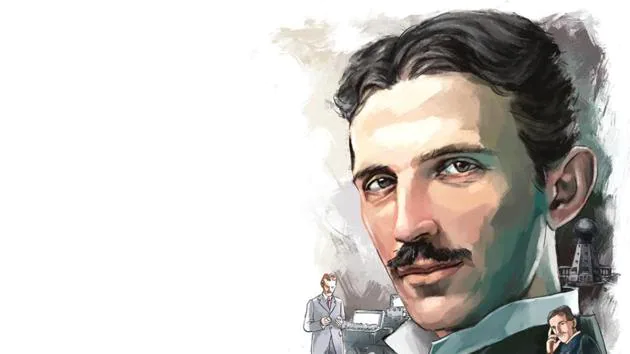
Nikola Tesla's life in a timeline
1856: Nikola Tesla was born in Smiljan, Croatia, then part of the Austro-Hungarian Empire.
1863: Tesla’s brother Daniel was killed in a riding accident. The shock of the loss unsettled the 7-year-old Tesla, who reported seeing visions—the first signs of his lifelong mental illnesses.
1882: He came up with the idea for a brushless AC motor, making the first sketches of its rotating electromagnets in the sand of the path.
1882: Tesla was hired as an engineer at Thomas Edison’s Manhattan headquarters.
Edison told Tesla he would pay $50,000 for an improved design for his DC dynamos. Edison took advantage of Tesla's innocence after Tesla presented a solution and asked for the money by saying that "Tesla, you don’t understand our American humor.". This led to Tesla quitting soon.
1887-88: He was granted more than 30 patents for his inventions and invited to address the American Institute of Electrical Engineers on his work. His lecture caught the attention of George Westinghouse, the inventor who had launched the first AC power system.
1890: Edison decided to show his power and the dark side of AC by arranging for a convicted New York murderer to be put to death in an AC-powered electric chair.
1890s: Tesla invented electric oscillators, meters, improved lights and the high-voltage transformer known as the Tesla coil.
Tesla and Westinghouse lit the 1891 World’s Columbian Exposition in Chicago and partnered with General Electric to install AC generators at Niagara Falls, creating the first modern power station.
1895: Tesla’s New York lab burned, destroying years’ worth of notes and equipment.
Tesla lived his last decades in a New York hotel, working on new inventions even as his energy and mental health faded.
1843: Tesla died in his room on January 7
Read this article to know more about this great man!!!!